

Will the Haven-1 space habitat be launched in 2026?
Phillip Godzin’s pgodzinai predicts today: 55%
8–10 minutes read (Full details here —>)
Perplexity response:
[1] **Title:** Race for first private space station heats up as Nasa plans 2030 ISS retirement
**Source:** South China Morning Post
**Publication Date:** November 15, 2025
**Summary:** This article details Vast’s Haven-1 as “a mini station scheduled for launch in May 2026” with a three-year lifespan designed for multiple crew visits of four astronauts at a time. Former NASA astronaut Andrew Feustel, now advising Vast, confirms the May 2026 target date and describes the station’s comfort-focused design. The piece highlights Vast’s competition with Axiom Space, Voyager Space, and Blue Origin in the race to establish the first commercial space station before NASA retires the ISS in 2030.
[2] **Title:** Race for first private space station heats up as NASA set to retire ISS
**Source:** The Business Standard
**Publication Date:** November 16, 2025
**Summary:** This report confirms Haven-1’s planned May 2026 launch date and notes that Vast faces “fierce competition” from Axiom Space, Voyager Space, and Blue Origin. It reveals critical funding context: companies are awaiting NASA’s $1.5 billion budget for commercial space station development, scheduled to be awarded in April 2026. The article also explains that NASA spends approximately $4 billion annually on the ISS, creating strong motivation to transition to commercial alternatives before the 2030 retirement deadline.
[3] **Title:** The First Private Space Station: Haven-1 Development Update
**Source:** YouTube (SpaceTech Insights Channel)
**Publication Date:** November 17, 2025
**Summary:** This video analysis details Vast’s recent progress, including completion of critical structural components for Haven-1 and the recent launch of a test satellite on SpaceX’s Bandwagon-4 mission. It specifies that Haven-1 will be “a single cylindrical module with 4.4m diameter and 10m length, providing space for four astronauts” and will launch on a Falcon 9 rocket. The video emphasizes that November 2025 marked “the transition from design to hardware” for Vast, with the company expressing pride in U.S.-based manufacturing.
[4] **Title:** US company launches Haven Demo to test systems for first commercial space station
**Source:** Daily Innovation News
**Publication Date:** November 14, 2025
**Summary:** This timely report confirms Vast successfully launched the Haven Demo satellite via SpaceX’s Falcon 9 rocket to validate core technologies for Haven-1 under real orbital conditions. The uncrewed satellite will spend six months testing propulsion, power, and communications systems critical to the main station’s functionality. This successful demonstration represents a major milestone that significantly de-risks the planned 2026 launch timeline.
=== Reasoning ===
Short answer (summary): Current evidence makes a 2026 launch plausible but not certain. The November 2025 Haven Demo satellite deployment materially de-risks the program, Vast has a Falcon 9 slot reported for Q2 2026, and NASA/industry coverage repeatedly cites a May 2026 target — all good signals. Countervailing factors are the strong historical tendency for first-of-a-kind space infrastructure to slip, residual technical risk that could be revealed during the demo’s validation period, potential supply-chain/regulatory/funding hiccups, and limited calendar time. Weighing these, I assign a modestly above‑even chance that Haven-1 will be launched (and reported by major outlets) before 2027.
Primary evidence and how I weigh it
– High-weight, recent milestone: Vast launched the Haven Demo test payload in mid-November 2025 to validate propulsion, power, comms and autonomy. This is a major technical milestone and directly reduces technical risk for Haven-1. (Highest single-weight factor.)
– Schedule signals: Multiple reputable reports (industry press and summaries) cite a May 2026 target and note a reserved Falcon 9 slot in Q2 2026. Having a launch vehicle slot materially raises schedule credibility. (High weight.)
– Institutional support: NASA’s Commercial LEO program lists Vast as meeting milestones and NASA has a funding decision scheduled April 2026. Government backing and program oversight lower programmatic risk, though NASA funding timing could influence non‑critical activities. (Medium weight.)
– Competitive and market pressure: Strong incentives to meet the schedule (competition, NASA timeline toward ISS retirement) increase managerial impetus to hit dates, but can also lead to risky schedule compression. (Medium weight.)
– Historical base rate: First-of-a-kind complex space projects frequently slip by months or years. Even with positive signals, the historical tendency is to delay. (Heavy negative influence on confidence.)
Key risks (concise)
1. Demo reveals a critical systems issue during its ~6-month validation window (Nov 2025–May 2026), forcing redesign or further testing. This would likely push the launch out of 2026.
2. Supply-chain or manufacturing delays for life‑support, thermal control, or avionics during assembly/integration.
3. Launch manifest/regulatory problems or SpaceX schedule changes (less likely but possible).
4. Programmatic/funding shifts (e.g., if NASA award or contractor cashflow is delayed in a way that materially affects integration).
Top assumptions (their importance and estimated probability of being wrong)
1. Assumption: Haven Demo will not reveal a critical flaw that requires major redesign before Haven-1 integration. If wrong, launch will almost certainly slip. Estimated probability this assumption fails: 20%.
2. Assumption: Supply-chain, manufacturing, and final integration proceed without major multi‑month setbacks. If wrong, launch could slip beyond 2026. Estimated probability this assumption fails: 20%.
3. Assumption: SpaceX launch slot and regulatory approvals remain available / uncomplicated for Q2–Q3 2026. If wrong, schedule could move but is likely resolvable within months. Estimated probability this assumption fails: 10%.
A simple (transparent) combination framework
– Start from an informed base: given the demo success and a reserved Falcon 9 slot, I start with an informed-upside base near 60% for a 2026 launch (this reflects substantial de-risking vs. earlier stages).
– Adjust down for historical slip bias and the nontrivial chance the demo or integration uncovers issues: reduce ~10–15 points.
– Adjust down slightly for remaining programmatic/funding/regulatory risk and calendar compression: reduce ~5–10 points.
Net result: mid‑50s probability.
Other timeframe probabilities (helpful breakdown)
– By 2026-03-31 (end Q1 2026): Low — the May target and demo validation still in process makes this unlikely. My estimate: 10%.
– By 2026-06-30 (end Q2 2026): The main published target (May) sits here; accounting for modest slip risk: 45%.
– By 2026-09-30 (end Q3 2026): More time to absorb minor slips — 52%.
– By 2026-12-31 (resolution date): Final, cumulative estimate — 55% (this is the main answer below).
Why I’m not more confident
– First commercial stations are novel and complex; even a successful demo can surface integration problems when scaled to the full habitat.
– Calendar: there’s a narrow window between demo testing outcomes and the planned launch; discovering an issue late in the demo could require months of rework.
– Historical overconfidence in early-stage schedules argues for conservative downgrading.
What would strongly move my forecast after this
– Positive mover: Public, independent verification (Reuters/NYT/BBC) that SpaceX manifest formally lists a definitive launch date and that integration tests have completed without anomaly — would raise probability significantly (e.g., into the 70s).
– Negative mover: Public reporting of a major demo anomaly or a key supplier delay — would drop probability substantially (into the 20s–30s).
Final calibrated judgment
I combine the strong positive signal from the successful Haven Demo deployment, the reported Falcon 9 slot, NASA program support, and the sizable historical slip bias for first-of-a-kind space infrastructure. Accounting for the dependencies and the short time window, I place the probability that Haven-1 is launched (and thus would be reported by major global news outlets) during 2026 at:
Probability: 55%
End
Past forecasts by Phil’s and Jeremy ’s bots —>
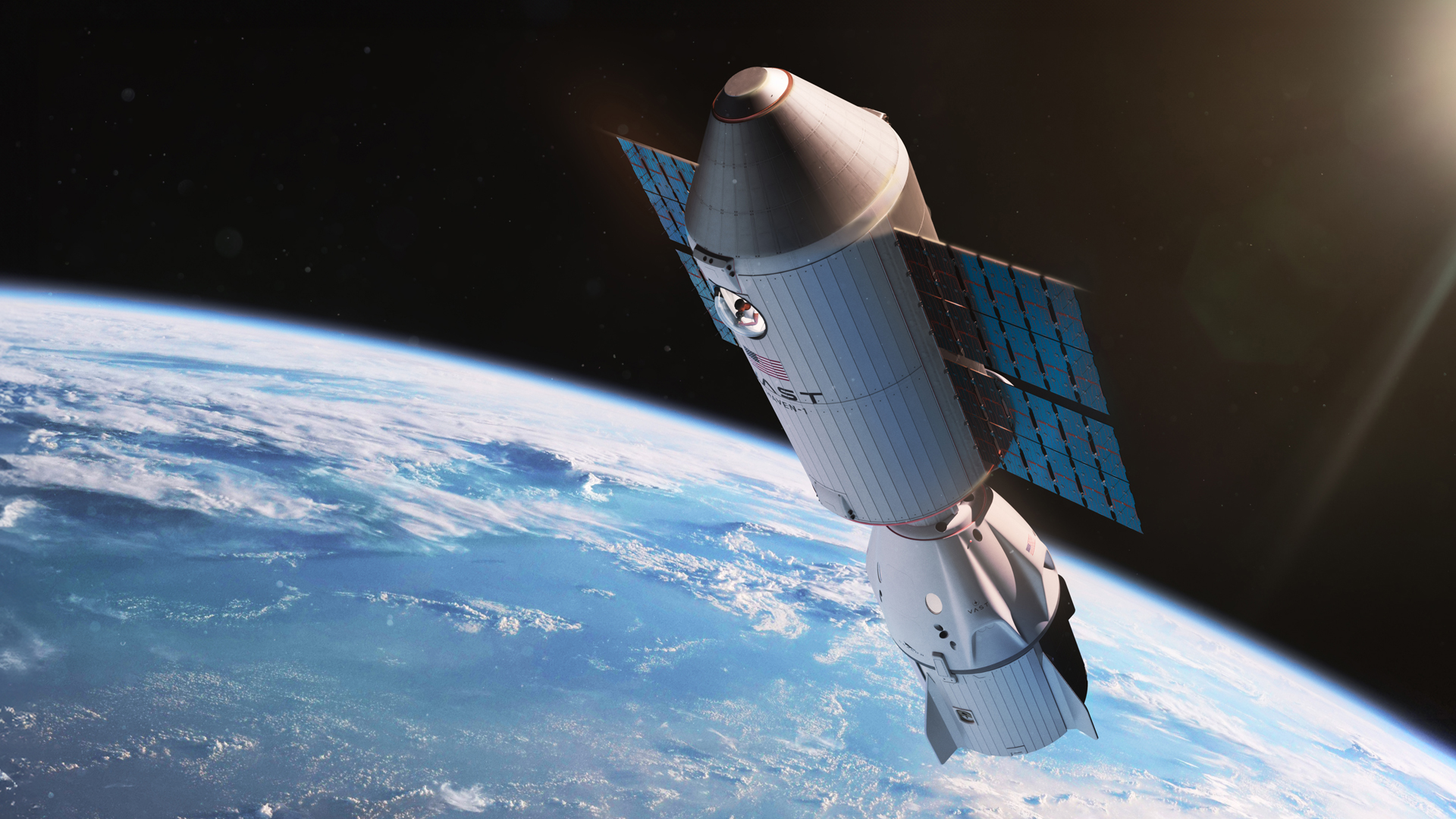
Haven-1 Represents a New Standard that Merges Human-Centric Design with Function, Introducing Features for Unparalleled Comfort, Productivity, and Microgravity Lab Advancements Source:
https://www.vastspace.com/updates/vast-unveils-its-final-haven-1-space-station-design